
Calibrating the Opportunity: Why ADAS Calibration Services Are the Next Great Automotive Roll-Up
Key Takeaways
- ADAS calibration services represent one of the most attractive recurring-revenue subsectors in the automotive aftermarket — a fragmented ~$1.2 billion U.S. market projected to reach roughly $3 billion by 2030.
- Investors should not confuse the autonomous vehicle technology boom of 2016–2021 (Cruise, Argo, Waymo) with the calibration services opportunity unfolding today. The former was a venture-stage technology bet; the latter is a service-business buy-and-build.
- Strategic acquirers — Safelite (Belron), Caliber’s Protech, Driven Brands’ Auto Glass Now, and LKQ’s Elitek — are already moving. PE-backed platforms like ADAS Safe are rolling up independents at 3.5x–5x EBITDA with the goal of exiting at 8x–10x.
- For independent calibration operators sitting on real cash flow and a defensible local footprint, the next 24 months represent the most favorable exit window we have seen in the sector.
First, Let’s Clear Up the Confusion
Whenever I bring up ADAS in a conversation with an investor, the first thing that comes to mind is usually the autonomous vehicle technology boom of the late 2010s — Cruise, Argo, Waymo, Mobileye, the LIDAR SPACs, the billion-dollar valuations, the eventual write-downs. That was a real story, and an expensive one. GM acquired Cruise in 2016 for north of $1 billion. Ford committed $1 billion to Argo in 2017. Between roughly 2016 and 2021, billions of dollars of venture and corporate capital flowed into autonomy startups at $20M to $100M+ round sizes, and most of it has either been written down, restructured, or quietly wound down.
That is not the story I am writing about today. In fact, it is almost the opposite of the story.
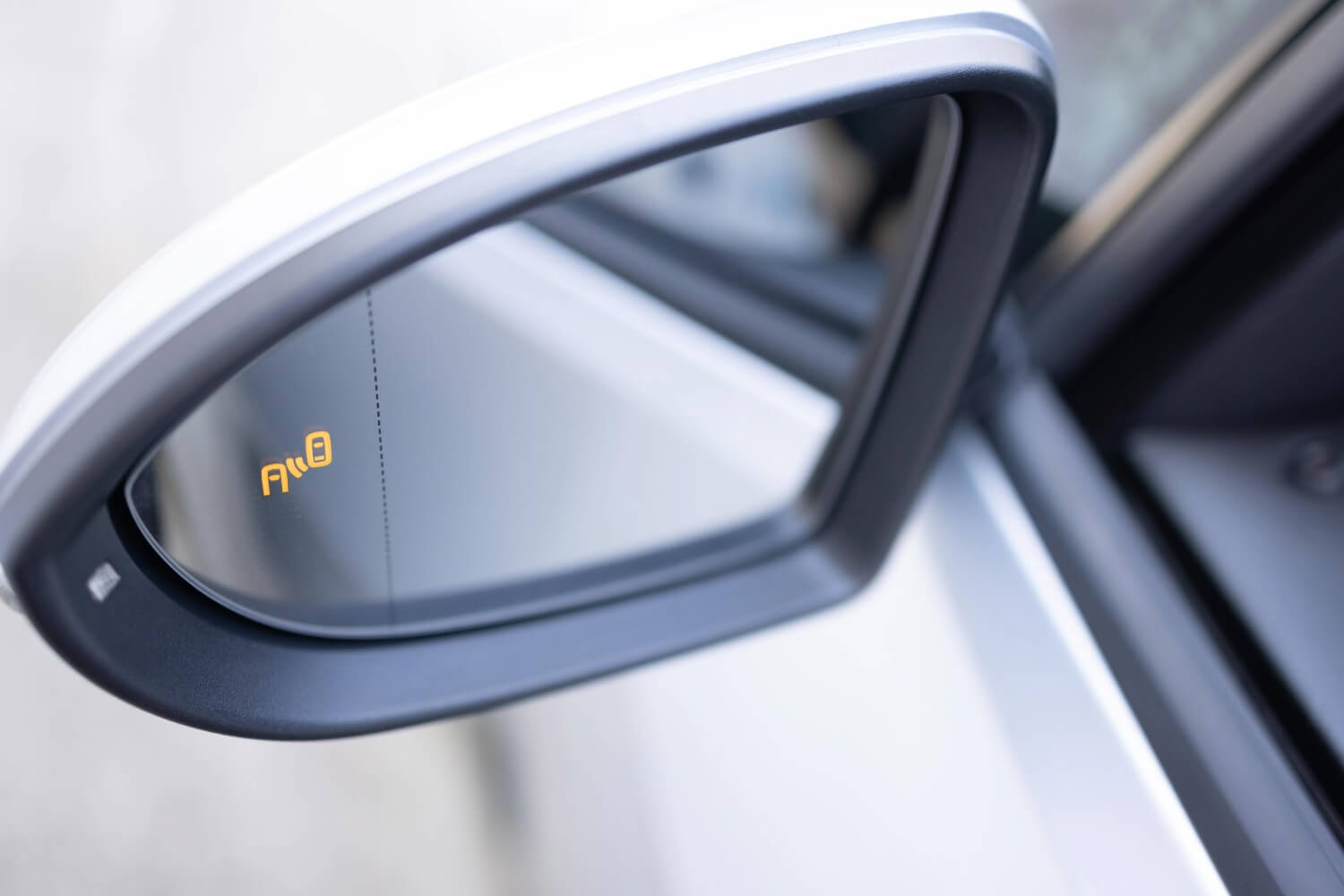
ADAS — Advanced Driver Assistance Systems — is the broader category of in-vehicle safety technologies (automatic emergency braking, lane keep assist, blind spot monitoring, adaptive cruise control, pedestrian detection, and so on). Autonomous driving is one possible endpoint of that technology curve. But the meaningful M&A opportunity right now is not in building these systems. It is in the unglamorous, high-margin, recurring-revenue service business of recalibrating them after every windshield replacement, fender bender, and suspension repair on every car that already has them.
That business is fragmented, cash-generative, and consolidating fast. It is exactly the kind of sector our team at Caruso & Co. spends its time on — and the reason we wanted to put this piece together.
A Quick Primer on the Acronyms
Before going further, a few definitions — because the terminology in this space is genuinely confusing and the lines get blurred all the time.
ADAS vs. Autonomous Driving (and the SAE Levels)
The Society of Automotive Engineers defines six levels of driving automation, from Level 0 (no automation) to Level 5 (fully autonomous in all conditions). What matters for our purposes is the gap between Levels 1–2 and Level 3+:
- Level 1 — a single driver-assist feature is automated, like adaptive cruise control or lane keep. The driver is still doing everything else.
- Level 2 — two or more features work together (e.g., adaptive cruise plus lane centering). The driver is still legally and physically in charge. Tesla Autopilot, GM Super Cruise, and Ford BlueCruise are all Level 2 systems despite the marketing.
- Level 3 — the car can handle the entire driving task in defined conditions, and the driver can take their eyes off the road — but must be ready to take over when prompted. Almost no production vehicles operate here in the U.S. today.
- Level 4 / 5 — true autonomy. This is the Cruise / Waymo / robotaxi end of the curve.
The vast majority of vehicles on U.S. roads today — and effectively all of the vehicles a calibration shop will ever see in their bay — are Level 1 or Level 2. ADAS calibration is a service business built around Level 1 and Level 2 cars, not Level 4 robotaxis.
LIDAR, Radar, Cameras, and Why Calibration Exists
ADAS features rely on a stack of sensors mounted around the vehicle. The most common are forward-facing cameras (usually mounted near the rearview mirror or behind the windshield), millimeter-wave radar (typically in the front bumper and rear quarters), and ultrasonic sensors (the parking-assist sensors you can see embedded in the bumpers). LIDAR — light detection and ranging — is a more expensive sensor that uses pulsed laser light to build a 3D map of the surroundings. LIDAR has been the centerpiece of most autonomous vehicle hardware stacks, but it is still rare on production passenger vehicles outside of a handful of premium models.
The reason calibration exists as a business at all is simple: these sensors are aimed with an extraordinary degree of precision. A forward camera that is off by even a fraction of a degree can put the system’s view of the road off by several feet at highway distances. Anytime a sensor is removed, replaced, or even physically disturbed — a windshield swap, a bumper repair, a wheel alignment, a suspension component replacement — the system has to be recalibrated to factory specifications. That recalibration is what creates the service revenue.
Tier 1 Suppliers
You will hear the phrase “Tier 1 supplier” constantly in this sector. A Tier 1 is a company that sells finished components or systems directly to original equipment manufacturers (OEMs — the automakers). Bosch, Continental, ZF, Magna, Aptiv, Denso, and Valeo are the household names. They are the companies actually building the radar units, cameras, and ECUs that go into new vehicles. Tier 2 suppliers sell to Tier 1s, Tier 3 suppliers sell to Tier 2s, and so on. The reason Tier 1s matter to this conversation is that they own the underlying calibration specifications and increasingly want to control how their hardware gets serviced in the aftermarket.
A Decade in the Making
ADAS as a consumer feature has been around in some form for more than a decade, but it has gone from a luxury option to a near-universal feature in a remarkably short period of time. According to industry data, ADAS-equipped vehicles grew from roughly 11% of the U.S. fleet in 2020 to an expected 50% by 2025, with projections of 75% by 2030. NHTSA has proposed making automatic emergency braking a federal requirement on all new passenger vehicles, which would effectively guarantee 100% penetration in new car production within a few model years.
Penetration is what creates the calibration market. A car without ADAS sensors does not need a calibration when its windshield is replaced. A car with ADAS sensors absolutely does — and the cost of that calibration typically runs a few hundred dollars per session, sometimes more. Multiply that across the roughly 14 million windshield replacements performed in the U.S. each year, plus the millions of collision repairs, and the math on this market becomes obvious very quickly.
KPMG estimates that the U.S. ADAS calibration services market reached approximately $1.2 billion in 2024 and is on track to grow to roughly $3.0 billion by 2030, at a compound annual growth rate of about 12.8%. Those are growth numbers you simply do not see in mature aftermarket service categories. And unlike the autonomy bets of the 2016–2021 era, the growth here is not contingent on a technology breakthrough or a regulatory leap — it is contingent on cars that have already been built and sold and are sitting in driveways today.
Simplifying the Sector
When investors first look at ADAS calibration, the temptation is to lump everything together. That is a mistake. The sector breaks cleanly into four distinct types of businesses, each with its own competitive dynamics, capital requirements, and acquirer universes:
- Service Providers — the businesses that actually perform calibrations on customer vehicles. This includes mobile calibration operators, dedicated brick-and-mortar calibration centers, and the in-house calibration departments of large auto glass and collision MSOs. Examples include Safelite (a Belron company), Caliber Collision’s Protech subsidiary, Driven Brands’ Auto Glass Now, and LKQ’s Elitek Vehicle Services. This is also where the long tail of independent operators lives — and where the M&A action is.
- Equipment Providers — companies that manufacture and sell the targets, frames, scan tools, and software platforms that calibration shops use. Bosch, Hunter Engineering, Autel, MAHLE, and TEXA dominate this category. These are typically larger industrial businesses with global footprints.
- Technology Providers — software, diagnostics, and remote calibration support businesses such as OPUS IVS and asTech. These companies typically generate recurring SaaS-like revenue and have attracted strategic and PE interest at premium multiples.
- Dealerships and OEMs — many calibrations are still performed in dealership service lanes, particularly for newer or more complex vehicles. OEMs increasingly want to control this channel because the data and the customer relationship both matter to them.
The middle two categories — equipment and technology — are largely the domain of the Tier 1 suppliers and global industrial buyers. Where the lower-middle-market opportunity sits, and where Caruso & Co. spends most of its time on this sector, is in the service provider category.
Today’s Environment: Fragmented, Profitable, and Quietly Consolidating
There is an important nuance in this sector that gets missed in the headlines. Unlike collision repair, where Caliber, Gerber, Crash Champions, and Classic Collision have spent the last decade aggressively rolling up independents, the calibration services market is still in the very early innings of consolidation. Most independent calibration operators are still independent. Many of them generate $500K to $5M in EBITDA. Many were started by technicians who saw the wave coming and built mobile service routes serving local body shops and glass shops in their region.
That looks a lot like the collision industry in 2010. And the strategic and PE buyers know it.
The Strategic Buyers Have Arrived
Safelite (owned by Belron) was the first mover and remains the dominant force at scale — the company effectively built the modern calibration services category by integrating recalibration into auto glass replacement following its acquisition of TruRoad Holdings in 2019. Caliber Collision’s Protech subsidiary has built one of the largest dedicated mobile calibration networks in the country and continues to expand it, particularly as Caliber moves toward its anticipated public offering. Driven Brands acquired Auto Glass Now in late 2021 for approximately $170 million, then layered on Auto Glass Fitters and a series of regional add-ons, building a national glass-and-calibration platform from effectively a standing start. LKQ — the largest aftermarket parts distributor in the country — launched Elitek Vehicle Services and has been actively building out its calibration footprint as well.
The pattern is hard to miss. Every major automotive aftermarket platform with any meaningful exposure to glass, collision, or mechanical service has decided that calibration is a capability they need to own.
The Private Equity Buyers Are Right Behind Them
Where strategics are pursuing scale and capability, private equity is pursuing the classic fragmented-services playbook. The most visible example is ADAS Safe, a PE-backed platform (with capital from Questline Capital) that has been actively rolling up independent ADAS calibration and mobile diagnostics businesses. The pitch to sellers is straightforward: cash at close plus an equity rollover into the platform, with the rolled equity worth a multiple of the initial check if the platform exits cleanly to a strategic or in an IPO.
The math works for both sides. Independent calibration shops doing $500K to $1.5M of EBITDA are typically trading in the 3.5x to 5x range — occasionally higher for the best-run operations with diversified customer bases and clean documentation. PE platforms are underwriting exits in the 8x to 10x range. That spread is the entire reason buy-and-build strategies exist in this kind of sector, and it is the reason this market is going to consolidate aggressively over the next 24 to 36 months.
The Tailwinds Are Real, and They Are Not Slowing Down
Three structural forces are pushing this sector forward, and none of them are cyclical:
- ADAS penetration of the U.S. vehicle parc is increasing every year as older vehicles age out and newer ones replace them. Each new vehicle that hits the road is a future calibration customer.
- Repair complexity is increasing. Calibration is no longer optional after most glass and collision work — OEMs require it, insurers require documentation of it, and the procedures are getting more involved as sensor stacks evolve.
- Regulatory tailwinds are arriving. NHTSA’s proposed AEB mandate would effectively guarantee universal ADAS adoption on new passenger vehicles, locking in calibration demand for decades.
On top of that, the data on actual safety outcomes is compelling enough to make the regulatory case almost write itself. IIHS research has consistently shown that automatic emergency braking reduces police-reported rear-end crashes by approximately 50%, and combined forward collision warning and AEB systems reduce injury crashes in those scenarios by more than 56%. Front crash prevention systems cut collisions with passenger vehicles by roughly 53%. These are real, documented reductions in real-world accident data — and the calibration that keeps these systems performing correctly is the link between the technology working in a lab and the technology working in your driveway.
What Lies Ahead
Our expectation at Caruso & Co. is that the next 24 months will be the most active period of M&A activity this sector has ever seen, and that the window will not stay open forever. Several specific dynamics inform that view:
First, the strategic buyers are not done. Safelite, Caliber’s Protech, Driven Brands’ Auto Glass Now, and LKQ’s Elitek are all actively pursuing both organic and inorganic expansion. Caliber’s confidential IPO filing in mid-2025 and the recent Boyd Group / Joe Hudson’s mega-merger in the collision space have both created additional pressure for the largest collision and glass platforms to continue building out calibration capability. Public market scrutiny rewards capability differentiation, and calibration is one of the cleanest stories these platforms can tell.
Second, the PE buyers are competing for a finite supply of attractive platform-quality independents. Most of the operators large enough to serve as a true platform — call it $2M+ of EBITDA, a defensible regional footprint, and a professional management team — already have multiple buyers circling. The platforms that get formed in 2026 will define the competitive landscape for the rest of the decade.
Third, the bid-ask spread that hampered M&A activity broadly in 2024 and early 2025 has largely closed. Financing conditions have improved meaningfully, sponsor confidence is back, and the recurring-revenue characteristics of calibration services make these businesses unusually financeable in the current credit environment.
Fourth, the dynamics work for sellers in a way they will not work forever. Independent operators contemplating a sale today have leverage that simply did not exist 24 months ago and may not exist 24 months from now. The combination of multiple strategic and PE buyers, healthy multiples, and structuring flexibility — cash, rollover equity, earn-outs tied to clean operating performance — puts well-prepared sellers in the strongest negotiating position they have ever been in.
A Note of Caution
Not every calibration shop is a great M&A candidate, and not every operator should sell. The businesses that command premium valuations share a few characteristics: they have diversified customer bases (no single body shop or glass franchise representing more than 20–25% of revenue), they document their calibrations with cloud-based reporting and before/after imagery, they have invested in both static (in-bay) and dynamic (mobile) capabilities, and they have a second technician and ideally a second van or bay. Single-operator owner-dependent businesses with concentrated customer bases will still trade — but they will trade at the lower end of the range, and they will see fewer credible buyers.
There are also real headwinds for sub-scale operators. Equipment costs are significant, and the technology evolves quickly. Trained calibration technicians are in genuinely short supply, and recruiting them is expensive. OEMs are increasingly trying to control which shops have access to the calibration data and tooling required to service their vehicles. These are exactly the dynamics that create the consolidation imperative — and exactly the reasons why sub-scale operators are increasingly looking for a strategic home rather than trying to scale on their own.
Where We Come In
Caruso & Co. is a middle-market sell-side investment bank focused on the broader automotive and transportation aftermarket. Our team has spent years developing relationships with the strategic and financial buyers most likely to acquire ADAS calibration, glass, collision, and adjacent service businesses, and we have built our practice around running disciplined, competitive sale processes that maximize outcomes for owner-operators.
If you operate an ADAS calibration business, an auto glass business, a collision center, or an adjacent automotive service business and you want to understand what your business is worth in today’s market — or you simply want to have a confidential conversation about the strategic landscape — we would welcome the opportunity to talk. Contact us today to get started.
Advisory Services
Caruso & Co. advises owners, management teams, and investors across the automotive retail and services sector on mergers and acquisitions, capital raises, and strategic alternatives.
For confidential discussions regarding strategic or financial advisory matters, please contact Caruso & Co.
